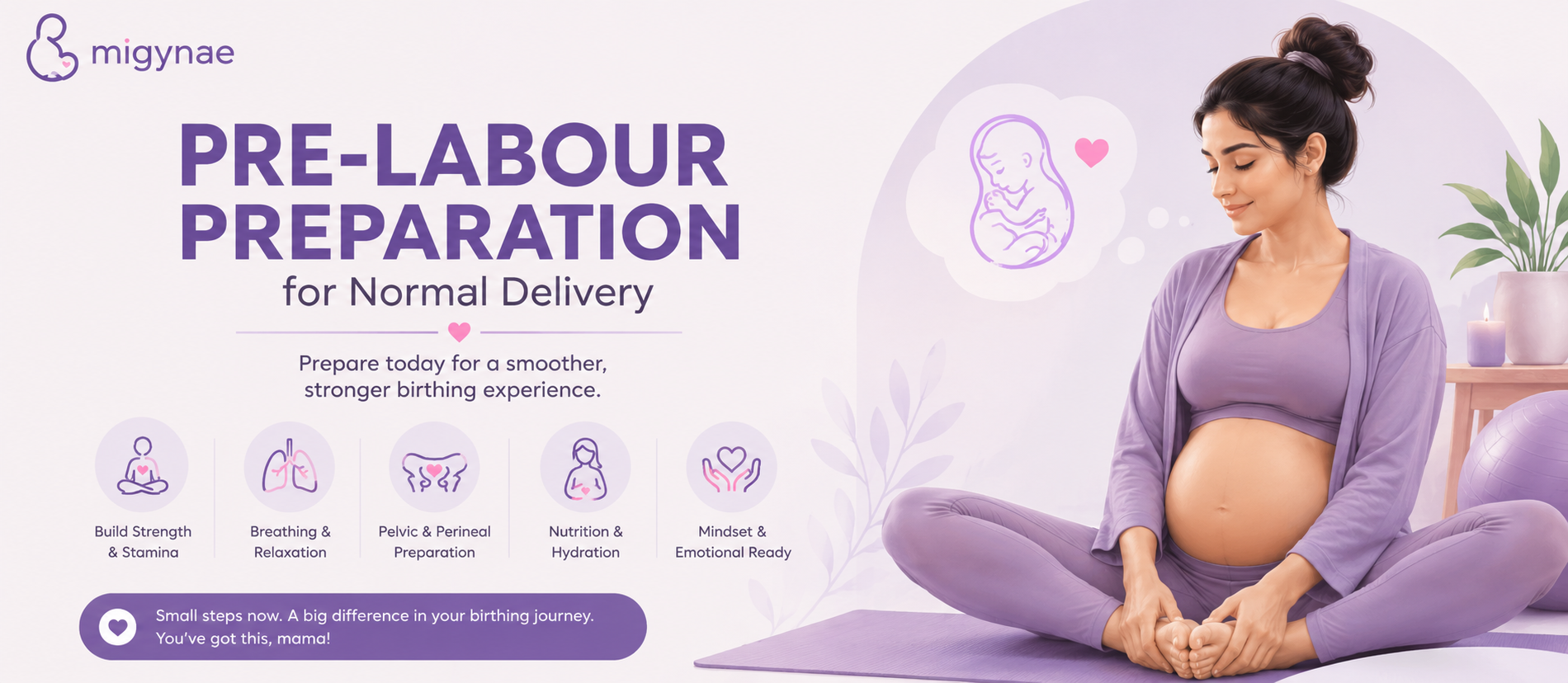
First — can you aim for a normal delivery?
Not every pregnancy should, and that is completely okay. Your doctor decides this based on your risk.
One baby, head-down, full-term and growing well; placenta in a normal (not low-lying) position; no major medical complications; no bleeding or early cervical shortening; and your doctor has cleared you.
If your pregnancy is higher-risk — for example a low-lying placenta, a breech or sideways baby, a previous caesarean or uterine surgery, twins, or a condition like severe pre-eclampsia or uncontrolled diabetes — a trial of normal labour may not be safest, and your doctor may plan a caesarean or a closely-watched birth. The active exercises here are meant for low-risk pregnancies — if you are higher-risk, follow the plan your own doctor gives you.
The one rule: stay active
Keep moving — carry on daily routine, avoid unnecessary bed rest, and don't panic at mild pulling pains. A flexible, strong body handles labour better.
Becoming over-cautious → stopping movement → the body stiffens → labour becomes harder.
From 28 weeks, step it up
Stay active through pregnancy. From 28 weeks, your third-trimester preparation begins — and as your due date nears, gentle activity builds into active, labour-focused exercise.
Three guides inside the app to prepare for a normal delivery
5 questions to ask your doctor
A prepared mother has a smoother journey.
- Am I a candidate for a normal delivery?
- What is my cervical status — length and dilation?
- Can we wait for spontaneous labour if it's safe?
- If my water leaks, can induction be tried first?
- When is a C-section truly required?
Head in — or call your doctor — if you notice:
- Strong, regular labour pains that keep coming closer
- Your waters break, or fluid leaks
- Any vaginal bleeding
- Your baby moving less than usual
- Severe headache, blurred vision, or sudden swelling
The full guide is in the app
Week-by-week labour prep, a 3rd-trimester diet, contraction timer & kick counter — free during beta.