The Two-Week Wait: When Should You Actually Take a Pregnancy Test?
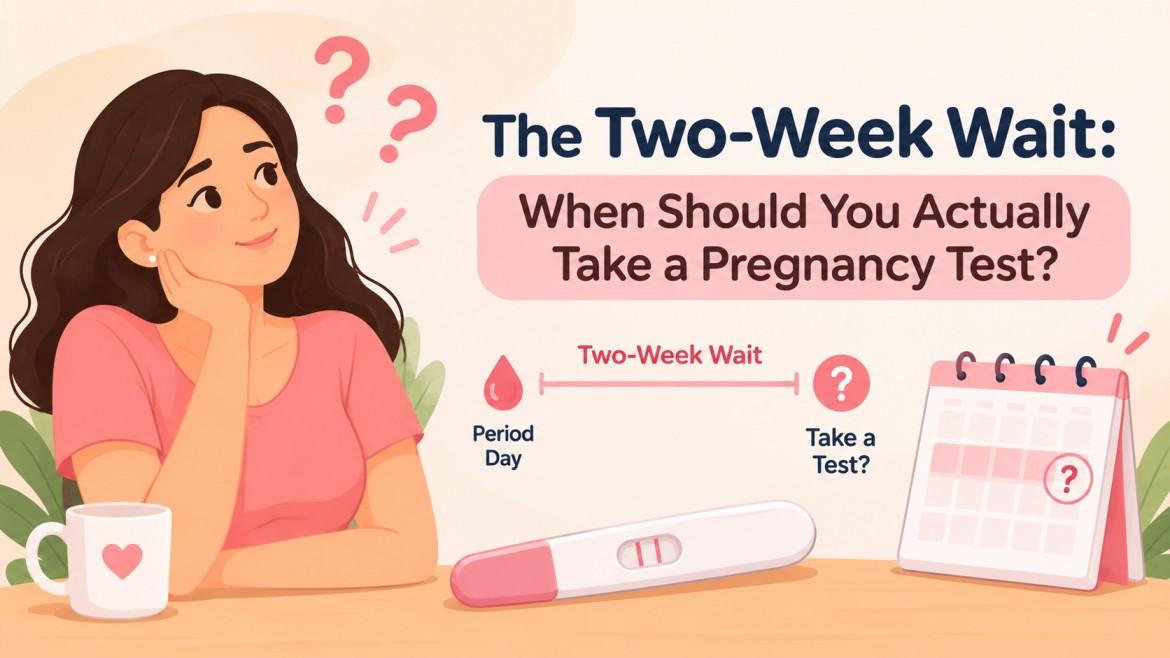
Those two weeks after ovulation can feel like the longest wait ever! You may find yourself checking your body for every little sign, wondering if that mild cramp means something, or feeling tempted to take a pregnancy test even before your period is due.
And when the result is negative, you may wonder if you tested too early.
If this sounds familiar, you're not alone. The wait can be exciting, confusing and sometimes stressful. But knowing when to test, what the result means and when to test again can make things a little easier.
Let's understand it step by step.
Download MiGynae – Your Pregnancy Care Companion
Track your pregnancy symptoms, log notes, and get OBGYN-backed guidance tailored to Indian mothers.


Why do I keep testing even though I know it's too early?
When you're hoping for a positive result, waiting can be really difficult. Taking a pregnancy test gives you a feeling that you're doing something, even when you know it may be too early.
But remember, testing again and again won't make the pregnancy hormone (hCG) appear any faster. It may only leave you dealing with repeated negative results and unnecessary stress.
Try choosing a date to test—ideally the first day your period is due or after it is missed. Until then, give yourself a little break from testing. You deserve to enjoy these days too.
Am I imagining pregnancy symptoms, or are they real this early?
Tender breasts, bloating, tiredness, mild cramps and mood changes can make you wonder if you're pregnant.
But here's the tricky part: these symptoms can happen before your period too!
After ovulation, your body produces progesterone whether you're pregnant or not. This hormone can cause many symptoms that feel just like early pregnancy signs.
So don't worry if you're noticing symptoms, or if you're not feeling anything at all. Neither can reliably tell you whether you're pregnant. A pregnancy test taken at the right time is a much better way to find out.
How does a pregnancy test actually detect pregnancy?
A pregnancy test looks for a hormone called hCG (human chorionic gonadotropin) in your urine.
Your body starts producing this hormone after the fertilised egg attaches to the lining of your uterus. In the beginning, the levels are very low, but they rise as early pregnancy progresses.
A home pregnancy test detects hCG once it reaches a certain level in your urine. If you test too early, there may simply not be enough hormone for the test to pick up.
That's why a negative result in the early days doesn't always mean you're not pregnant.
Can you take a pregnancy test before a missed period?
Yes! Some pregnancy tests are sensitive enough to detect pregnancy a few days before your expected period.
But there's a catch: if you test too early, you may get a negative result even if you're pregnant.
This happens because your hCG levels may not have risen enough yet.
If you can wait, it's better to test from the first day of your missed period. You'll have a much better chance of getting a reliable result.
What does a faint line actually mean?
You've taken the test, and there's a second line—but it's so light that you're not sure whether it's positive!
Don't panic. A faint coloured line that appears within the time mentioned in the test instructions usually means a positive result. It may simply be that your hCG levels are still low because it's very early in pregnancy.
A faint line does not automatically mean something is wrong.
If you're unsure, repeat the test after 48 hours or speak to your doctor. Remember to follow the instructions of your particular test kit.
Positive line or evaporation line—how do you tell the difference?
This is one of the most confusing parts of home pregnancy testing.
Here's a simple way to understand it:
- A positive line: A coloured second line (even if faint) appears within the reading time mentioned in the instructions.
- An evaporation line: A faint, often colourless or grey mark may appear after the test has dried, outside the recommended reading time.
The most important thing is to read your test within the time mentioned on the packet. Don't go back and check the same strip an hour later, as the result may no longer be reliable.
If you're still confused, use a fresh test or consult your doctor.
What happens if you test too early?
The most common problem is a false negative.
This means your test says you're not pregnant, even though you may actually be pregnant. It usually happens because your hCG levels are still too low to be detected.
So, if you test early and get a negative result, don't lose hope just yet.
Wait a few days and test again, especially if your period hasn't arrived.
What is the best day to actually take a pregnancy test?
For most women, the best time to take a home pregnancy test is from the first day of a missed period.
For a more reliable result:
- Use your first-morning urine, especially if you're testing early.
- Check that your test kit hasn't expired.
- Follow the instructions carefully.
- Read the result only within the recommended time.
You don't necessarily need morning urine once your period is overdue, but it can help when hCG levels are still low.
Does an irregular cycle make it harder to know when to test?
Absolutely! If your periods are irregular, it can be difficult to know whether your period is actually late or simply delayed.
You may have ovulated later than usual, which also means pregnancy hormone levels may take longer to become detectable.
If you don't know when your next period is due, a useful rule is to take a pregnancy test at least 21 days after unprotected sex.
If you're tracking ovulation, that information can also help you decide when to test.
Why does everyone suddenly want to know if you have good news?
If you're trying to conceive, you probably know how this goes!
A family member asks, "Any good news?" Someone at work wants to know if you're pregnant yet. And sometimes, even before you have an answer yourself, everyone seems to be waiting for one.
Remember, you don't have to share anything until you're ready.
You can simply say, "We'll let you know when there's something to share."
Your pregnancy journey is personal. Give yourself the time and space you need.
Negative test, but still no period—what should you do?
A negative pregnancy test with no period can be confusing. But there can be several reasons for this:
- You may have tested too early.
- You may have ovulated later than expected.
- Stress, illness, travel or hormonal changes may have delayed your period.
If your test is negative but your period still hasn't arrived, wait 2–3 days and repeat the test.
If the second test is also negative and your period hasn't come, consult your gynaecologist. Your doctor may recommend a blood hCG test or further evaluation depending on your situation.
When should you stop testing and call your doctor?
If you've taken repeated home tests and still don't have a clear answer, there's no need to keep buying test kits and worrying.
Speak to your gynaecologist. A blood hCG test can help clarify whether you're pregnant, and your doctor can guide you on what to do next.
If you have severe abdominal pain, particularly on one side, heavy bleeding, dizziness or fainting, seek urgent medical attention—even if your home pregnancy test is negative.
A little reminder before you go: The two-week wait can feel long, but you don't have to spend every day looking for signs. Give your body time, test at the right moment and be kind to yourself. Whatever the result, take the next step with the right guidance and support.
Your journey, your pace. We're with you.
Download MiGynae – Your Pregnancy Care Companion
Track your pregnancy symptoms, log notes, and get OBGYN-backed guidance tailored to Indian mothers.
Frequently Asked Questions
1. Why do I keep testing even though I know it's too early?
The wait can be difficult, especially when you're hoping for a positive result. Taking a test may make you feel you're doing something, but testing too early can lead to repeated negative results. Choose a test date and try to wait until then.
2. Can I take a pregnancy test before my period is due?
Yes, some sensitive tests can detect pregnancy a few days before your expected period. However, testing early increases the chance of a false negative. It's better to test from the first day of your missed period.
3. What's the difference between a faint positive and an evaporation line?
A faint positive usually appears as a coloured second line within the test's reading time. An evaporation line may appear after the recommended reading time and is often colourless or grey. Always follow the kit instructions.
4. Why is my pregnancy test negative even though my period hasn't come?
You may have tested too early, used diluted urine or ovulated later than expected. Wait a few days and repeat the test. If your period still doesn't arrive despite repeated negative results, consult your gynaecologist.
5. Does taking a pregnancy test in the morning make a difference?
Yes, especially when testing early. First-morning urine is usually more concentrated, making it easier to detect low levels of hCG. Once your period is missed, you can generally test at other times too.
6. How soon after a negative pregnancy test should I test again?
If you tested early, wait 2–3 days before repeating the test. If your period is still missing and the repeat test is negative, speak to your doctor.
7. Are pregnancy test kits sold in India, like Prega News, reliable?
Yes, commonly available home pregnancy test kits work by detecting hCG in urine. Their reliability depends on testing at the right time, using the kit correctly and checking its expiry date. Always follow the instructions provided with the kit.
Stop guessing which day to test
MiGynae's free ovulation tracker helps you count from an actual ovulation date instead of a guessed one — useful whether your cycle is predictable or not, and free either way.
More in Getting Pregnant
Preconception Health Checklist: Essential Steps Before Getting Pregnant
Planning for a baby starts well before conception. Here is an essential medical checklist covering folic acid, blood tests, dental care, and lifestyle changes for Indian couples.
Spotting During Early Pregnancy: What's Normal and When Should You Worry?
Is spotting in early pregnancy normal? Learn the difference from miscarriage signs and when to call your doctor immediately.
Stomach Cramps During Early Pregnancy: What's Normal and What's Not
Experiencing mild twinges and lower abdominal cramping in early pregnancy? Learn why uterine stretching causes discomfort and how to recognize red flags.
Download MiGynae – Your Pregnancy Care Companion
Track baby kicks, time contractions, access personalized Indian nutrition charts, and get OBGYN-backed answers every day.